Artists’ membership publishing is selling recurring access to creative work in progress with the aim of turning an existing following into paid subscribers. When you compare membership platforms for creators, prioritize a clear process-content offer, manageable publishing commitments, and platform terms—not a longer feature list.
- ModelView fits artists selling exclusive photo, video, and audio process content through subscriptions.
- Choose membership platforms for creators around repeatable artist memberships, not a single finished project.
- ModelView’s 90% creator share is not guaranteed net take-home pay after other costs.
- Publish your opening content before inviting followers to become paid subscribers.
Why membership platforms matter for artists
An artist membership sells access to decisions, experiments, and progress—not just finished work. Your public followers already see the outcome. A paid subscription needs a distinct reason to return: what you tried, what changed, and why you made the final choice.
For your 2026 platform shortlist, start with the membership platforms for creators fee comparison. Then assess whether your proposed membership gives followers something specific to subscribe to.
The practical constraint is production time. Recording a process is not the same as explaining it, and editing commentary competes with making the artwork itself. Build an offer around material you can capture during your existing practice rather than a separate production schedule.
Choose the publishing commitment before you choose the platform. A subscription creates an ongoing expectation. Make that expectation clear enough for a follower to understand and narrow enough for you to meet.
Turn your process into a paid membership
Define the part of your process worth following
Start manually: review your recent comments, messages, and saved questions. Group requests by what followers want to understand, such as composition choices, revisions, materials, or the move from sketch to finished work. Treat these requests as clues, not proof that someone will subscribe.
Choose a promise you can demonstrate. Access to your creative process is broad; annotated studies showing how you solve composition problems is concrete. The narrower version tells followers what they receive and helps you decide what belongs inside the membership.
Separate educational access from personal instruction. Sharing your own decisions does not require you to review subscribers’ work. If you do not intend to provide individual feedback, do not suggest that membership includes it.
- Collect recurring questions from your existing audience.
- Choose one process theme you can show repeatedly.
- Write a one-sentence description of the paid content.
- Name what membership does not include.
- Identify an existing work session you can document.
Build an opening collection before inviting subscribers
Use your existing recording tools and folders first. Capture the work, select the useful moments, and add enough context that a follower understands what happened without watching the entire session. You do not need a separate production setup to establish whether the offer makes sense.
For a practical 2026 launch plan, prepare 3 opening posts: an orientation, a process breakdown, and a follow-up showing the result. This is a suggested starting structure, not a platform requirement or a claim about conversion performance.
Make each post useful on its own. Someone joining between projects should still understand the current work, where to begin, and what your commentary adds. Avoid making subscribers search through disconnected fragments to reconstruct the story.
Your opening collection should demonstrate the membership rather than merely announce it. A welcome message alone explains your intentions; a finished process breakdown shows what the subscriber receives.
- Explain the project and the decisions you will document.
- Publish an annotated sequence of work in progress.
- Add commentary about a change, mistake, or rejected direction.
- Show the result alongside the earlier decision.
- Tell new subscribers which post to open first.
Match the platform to your content and commission
Make a simple checklist before opening accounts. Record the formats you need, how you will explain the subscription, and which payment and account terms you must inspect. This manual comparison prevents an attractive headline from replacing a decision about your actual publishing needs.
ModelView supports subscriptions for exclusive photo, video, and audio content, with creators keeping 90% of earnings under its stated revenue share. That format mix fits artists who want to combine progress photographs, recorded demonstrations, and spoken explanations.
ModelView is best for artists selling exclusive photo, video, and audio process content through subscriptions. Its stated share leaves a 10% platform commission; it does not establish your final take-home amount after payment-processing fees, taxes, and other costs.
The limitation is straightforward: a platform does not create your editorial promise or persuade your existing followers for you. Check current terms for payout arrangements, content permissions, account requirements, and any additional charges before committing.
- List the media formats your opening collection uses.
- Separate platform commission from every other cost.
- Read current payment, refund, and cancellation terms.
- Check content rules against the work you intend to publish.
- Evaluate the subscriber’s path from invitation to content.
Set a publishing rhythm your studio can support
Plan your next 4 weeks in a plain calendar. Put your art-making commitments in first, then place capture, editing, and publishing around them. This is a planning exercise, not a required posting frequency.
Choose 2 repeatable formats to begin, such as annotated progress photographs and a narrated recap. A small format set makes the promise easier to explain and reduces the number of production decisions attached to every post.
Keep your 2026 commitment specific without promising constant access. State the publishing rhythm you intend to maintain, distinguish updates from complete breakdowns, and explain how a project spans multiple posts. Do not imply that a subscription includes immediate personal replies unless you intend to provide them.
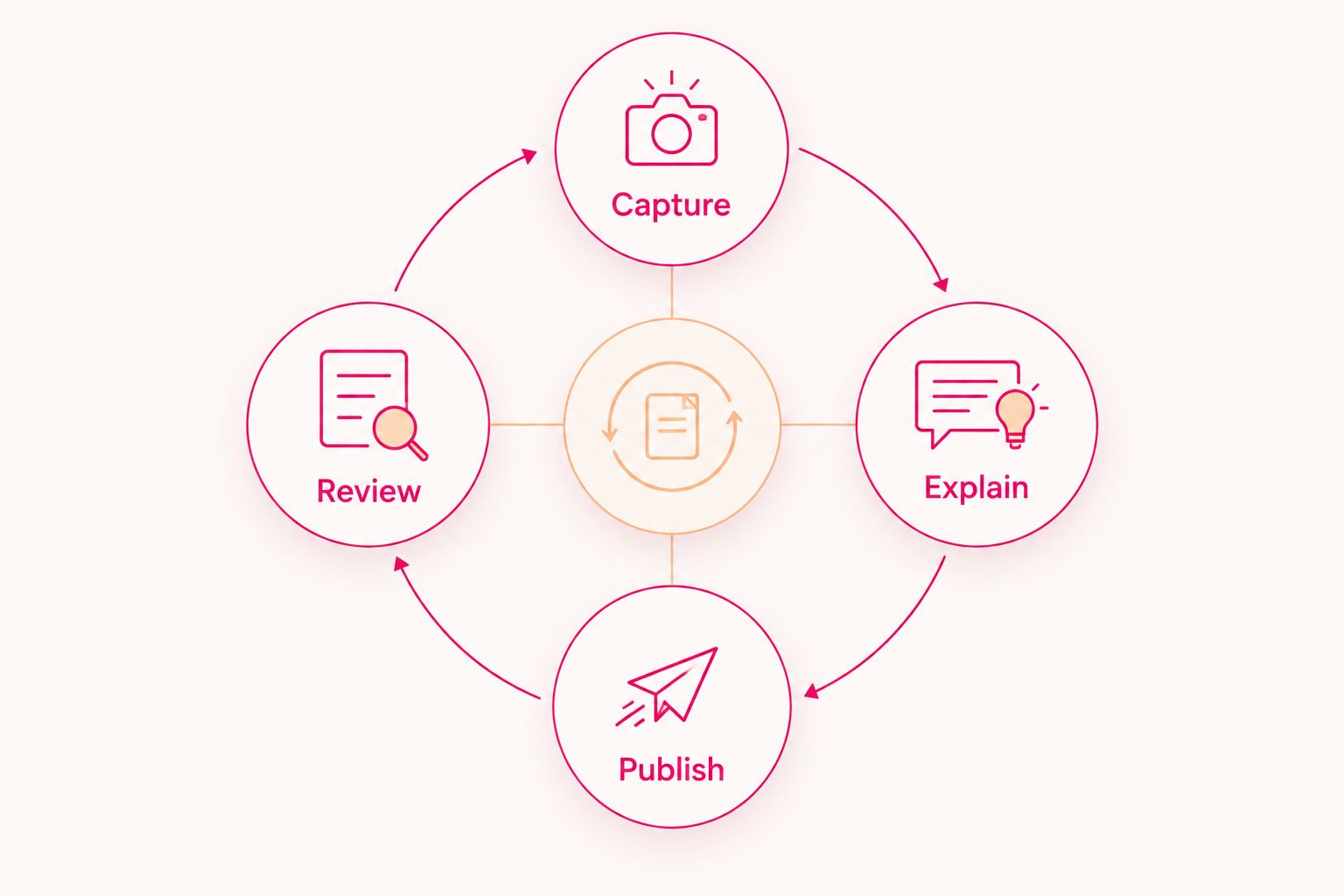
Use a repeatable production sequence. Decide what to show before recording, then add context, publish, and collect questions for the next installment. Capture material during real work rather than repeatedly recreating actions for the camera.
- Capture: record the decision or change worth explaining.
- Explain: add the context a viewer cannot see.
- Publish: identify what the subscriber should notice.
- Review: collect questions that reveal missing explanations.
Invite followers with a clear paid-content distinction
Write the invitation in a document before posting it publicly. Explain who the membership serves, what is already published, and what subscribers receive beyond your public posts. Keep the distinction concrete rather than describing the paid space as simply more exclusive.
A public post can show the finished piece and a useful observation. The paid post can explain the alternatives you considered, the revision you made, and what you learned. That distinction gives both audiences a complete experience without making the public post deliberately unhelpful.
Avoid selling intimacy when your offer is content. Phrases suggesting unrestricted access create expectations that a library of process photographs cannot fulfill. Name the actual deliverable instead.
Start with the followers already engaging with the relevant work. Share a representative preview and a direct description of the membership. Do not promise subscribers, income, or a particular conversion rate.
- Describe the artist or follower the membership serves.
- Name the opening content already published.
- Show a preview that demonstrates your explanation style.
- State the ongoing publishing commitment clearly.
- Use one direct invitation rather than competing requests.
Measure subscriptions and sustainable delivery
Start with a simple spreadsheet. Record the public invitation, destination visits where available, paid subscriptions, cancellations, and the time you spend preparing content. Keep observations separate from assumptions about why someone subscribed or left.
A sign-up is not the same as a paid subscription. Track the action that matches your goal, then inspect whether you can continue delivering the offer. A launch that creates more editing work than you can sustain needs a narrower content promise, not just more promotion.
Compare like periods and record what changed. If you change the invitation, content format, and publishing rhythm together, you cannot isolate which change affected the result. Ask subscribers what helped them decide, without treating a small set of replies as a universal rule.
For your 2026 review, assess both audience response and workload. Keep the content that serves the stated membership promise; remove commitments that consume time without supporting that promise.
- Track paid subscriptions separately from account registrations.
- Record preparation time alongside each published post.
- Note cancellations without inventing reasons for them.
- Ask which process explanations subscribers want continued.
- Change one major part of the offer at a time.
Compare publishing options for artist memberships
Use this 2026 comparison to choose an operating model, not to assume that every option solves the same problem. Recurring access, public audience-building, and a single finished release serve different purposes.
Only the platform commission stated in the inputs is shown below. It is not a subscription price or a complete account of creator costs.
| Option | Best for | Main advantage | Key limitation |
|---|---|---|---|
| ModelView subscriptions | Artists selling ongoing exclusive photo, video, and audio process content | Stated 90% creator share, equivalent to a 10% platform commission | The revenue share does not establish final net income or replace audience promotion |
| Manually managed membership workflow | Artists testing an offer before selecting their publishing setup | You can define the content promise and organize a small opening collection first | You must arrange payment, access, delivery, and subscriber administration separately |
| Public process publishing | Artists clarifying which explanations interest their followers | Lets followers experience your explanation style before a paid invitation | Public engagement does not demonstrate willingness to subscribe |
| One-off process collection | Artists documenting a bounded project rather than an ongoing practice | Connects the offer to a specific beginning and end | A single release does not provide a recurring membership promise |
Choose recurring membership when you can keep delivering a clear reason to return. Choose a bounded release when the value belongs to one project. Neither choice removes the need to explain exactly what the buyer receives.
A manually managed test is useful for organizing the offer, but it also puts more administration on you. A hosted subscription platform handles a different part of the problem; evaluate its documented capabilities rather than assuming every task is included.
Common mistakes artists make with memberships
Selling leftovers instead of explanations
An unused photograph is not automatically useful paid content. Select material that reveals a decision, solves a question, or shows a meaningful change. Give the subscriber context rather than treating unpublished material as valuable simply because it is private.
Promising a new production job
Daily edited videos, individual critiques, and constant messages are different commitments. Do not bundle them casually into an art-process membership. Start with the work you can capture naturally and expand only when your schedule supports it.
Confusing creator share with profit
A 90% share describes one part of the economics, not your disposable income. Keep platform commission separate from processing charges, taxes, materials, and production costs. Review the current terms before relying on any headline figure in your 2026 plan.
Launching an empty paid space
An invitation without published examples asks followers to judge a promise they cannot inspect. Prepare the opening collection first. Show how your commentary adds value beyond the finished artwork already visible publicly.
Treating every follower as the same buyer
Some followers want finished images; others want to understand your decisions. Write the offer for the second group if process content is what you intend to sell. Do not distort your whole public practice to pursue people who do not want the membership.
FAQ
What are the best membership platforms for creators selling art-process content?
The best fit supports your content formats, publishing commitment, and acceptable commission. ModelView suits artists selling exclusive photo, video, and audio subscriptions; assess current terms and your delivery needs before choosing.
What should artists include in a paid process membership?
Include explanations of decisions, revisions, and results that go beyond the finished artwork. Annotated progress photographs, narrated demonstrations, and project recaps give the membership a concrete purpose.
Do I need a large following to start an artist membership?
Follower count alone does not establish whether people will subscribe. Start by testing a specific offer with the followers already asking about your process, without assuming a conversion rate.
Does keeping 90% mean I take home 90% as profit?
No. A 90% creator share is not guaranteed net profit after payment-processing fees, taxes, materials, and other costs. Keep those items separate when assessing the membership’s economics.
Should I sell a subscription or a single process collection?
Choose a subscription for an ongoing publishing promise and a single collection for a bounded project. Do not create a recurring commitment if the useful material ends with the current artwork.
How often should I publish paid art-process content?
Publish at a rhythm you can maintain alongside making the art. Plan capture, explanation, and editing before announcing the commitment, and distinguish short updates from complete breakdowns.
How do I turn existing followers into paid subscribers?
Show a representative preview and explain what the paid membership adds to your public work. Publish the opening content first, then invite followers who want that specific depth of explanation.
One last thing
Your most useful process post can be the decision you reversed. A finished image shows the outcome; an explained revision shows how you recognized a problem and responded.
Before your next invitation, choose one abandoned direction and document why it changed. Publish the explanation as part of your opening collection. That gives followers something concrete to evaluate—and gives you a repeatable editorial idea without inventing a separate project.